Key Takeaways
- Choosing the wrong MSSP in the UAE can create serious security gaps, compliance failures, and delayed incident response.
- A strong MSSP must provide 24/7 SOC monitoring, real-time detection, and active incident response—not just alerts.
- UAE compliance alignment (NCA, DIFC, ADGM, PDPL) is critical, making local regulatory expertise essential for MSSP selection.
- Effective evaluation goes beyond features and should verify SOC capability, response ownership, integration, SLAs, and transparency.
- Shortlisting and final selection should be based on proven UAE experience, validated performance, and real-world incident handling ability.
Choosing the wrong managed security services provider in the UAE does not just waste the budget. It creates serious security gaps. When an incident occurs, delayed response or weak detection can lead to prolonged breaches, data loss, and regulatory exposure. Many businesses only realize this after a failed audit or when no one responds to a critical alert in real time.
This decision is more complex in the UAE. Regulatory frameworks such as NCA, DIFC, and ADGM require strict compliance. At the same time, the number of truly capable providers is limited. There is also a clear gap between global MSSPs and local requirements, which increases risk.
This guide will help you evaluate, validate, and confidently choose the right MSSP for your business.
What a Good MSSP Should Actually Deliver (Quick Reality Check)
Core capabilities (no fluff)
A reliable managed security services provider should deliver continuous protection, not just tools. This includes 24/7 monitoring through a dedicated Security Operations Centre (SOC), real-time threat detection combined with active response, and reporting aligned with compliance requirements. A structured onboarding process is also critical to ensure smooth integration with your existing systems and clear visibility from day one.
What to ignore
Many providers position themselves as MSSPs but fall short in execution. Installing security tools is not the same as managing security. Alert-only services that forward notifications without action add little value. Security is also not a one-time setup. It requires continuous monitoring, analysis, and response.
Now that you know what to expect, the next step is understanding how to choose the right MSSP.
Why Choosing an MSSP in UAE Requires a Different Approach
Regulatory pressure (decision driver)
Cybersecurity in the UAE is closely tied to regulatory compliance, and this directly impacts how you should evaluate an MSSP. Frameworks such as the National Cybersecurity Authority Essential Cybersecurity Controls (NCA ECC), along with regulations from DIFC and ADGM, require organizations to implement structured security monitoring, incident response, and reporting. The UAE Personal Data Protection Law (PDPL) further increases accountability around how data is handled and protected.
This means your MSSP is not just a service provider. It becomes a critical part of your compliance strategy. Choosing a provider without proven alignment to these frameworks can lead to audit failures, penalties, or operational disruption.
Local vs global MSSPs (critical insight)
Not all MSSPs operate effectively within the UAE context. Global providers may offer strong tooling, but often lack alignment with local requirements. Data residency is a key concern, as sensitive logs and security data may need to remain within the region. Response time is another gap, where timezone differences can delay critical actions during incidents.
Local expertise also matters. An MSSP familiar with UAE regulations can provide audit-ready reporting and guidance, while providers without this experience may fall short. In some cases, incidents require on-site support, which remote-only providers cannot deliver.
This is why choosing a UAE-aware MSSP is not optional. It is essential for both security effectiveness and compliance readiness.
The 7 Criteria That Actually Matter When Choosing an MSSP in UAE
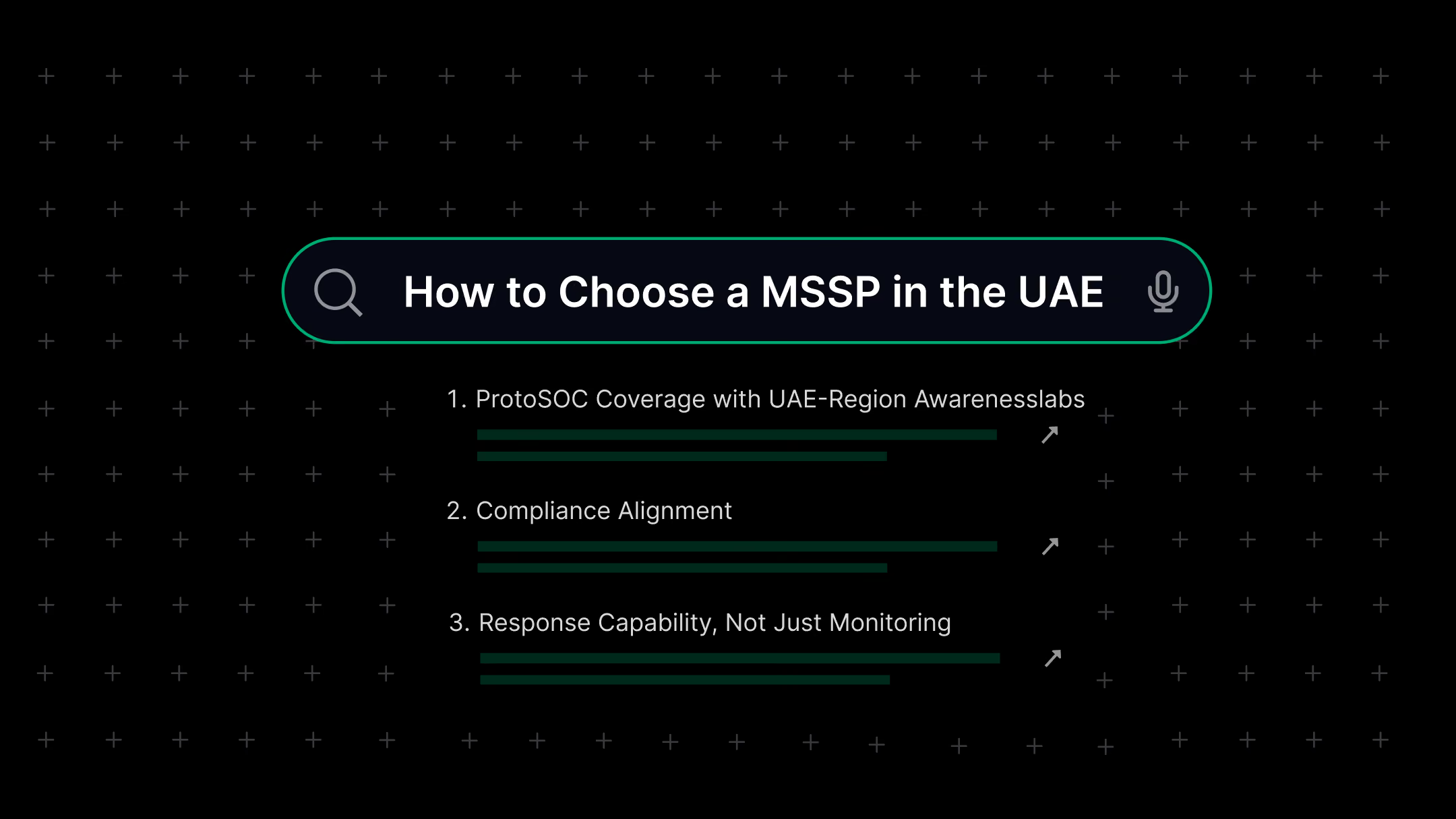
Choosing a managed security services provider is not about features. It is about capability, accountability, and real-world performance. These seven criteria will help you evaluate providers based on what actually impacts your security and compliance.
1. 24/7 SOC Coverage with Real-Time Response
A true MSSP operates a fully staffed Security Operations Centre that monitors and responds to threats around the clock. This should not rely on on-call engineers or outsourced teams with delayed response windows.
Ask directly where the SOC is located and whether analysts are actively monitoring your environment at all times.
Good: Real-time triage, investigation, and immediate action
Bad: Alerts sit in queues or are escalated hours later
2. Detection AND Response Capability (Not Just Alerts)
Many providers offer detection, but fewer take ownership of response. Effective MSSPs combine SIEM, XDR, and automation with a defined incident response process.
You should expect not just alerts, but active containment, remediation guidance, and clear ownership during incidents.
Good: Threat containment and response execution
Bad: Alert forwarding with no action
3. UAE Compliance Alignment (NCA, DIFC, ADGM)
In the UAE, security and compliance are closely linked. Your MSSP should align its services with frameworks such as NCA ECC, DIFC, and ADGM requirements.
Ask for compliance mapping and examples of audit-ready reporting.
Red flag: A provider claims compliance but cannot reference specific frameworks or controls
4. Integration with Your Existing Stack
Your MSSP should work with your current infrastructure, not force a complete overhaul. This includes cloud platforms, endpoints, identity systems, and existing security tools.
Look for experience across environments such as Microsoft, AWS, or hybrid setups. The goal is seamless integration with minimal disruption.
5. Pricing Transparency and Cost Structure
Pricing should be clear, predictable, and aligned with your business size and risk profile. Understand whether the model is subscription-based or customized, and identify any hidden costs related to onboarding, integrations, or incident response.
Good: Clearly scoped services with predictable monthly costs
Bad: Vague pricing that changes after onboarding
6. SLA, Reporting and Accountability
Service level agreements define how quickly your MSSP detects and responds to threats. Metrics such as Mean Time to Detect (MTTD) and Mean Time to Respond (MTTR) should be clearly defined.
Ask who is responsible during an incident and how escalation works, especially outside business hours.
Key question: Who responds at 3am when a critical alert is triggered?
7. Proven Experience and UAE Track Record
Experience matters, especially in a region with specific regulatory and operational challenges. Look for certifications, documented case studies, and references from UAE-based clients in similar industries.
A provider with proven local experience is more likely to understand compliance requirements, respond effectively, and deliver consistent results.
How to Verify an MSSP Before You Sign
Most MSSP evaluations stop at feature comparisons and sales conversations. That is where mistakes happen. A provider may sound strong on paper but fail under real-world conditions. The only way to make a confident decision is to verify their capabilities before signing.
Start by requesting evidence. Ask for sample reports, SLA performance logs, and compliance mapping aligned to frameworks such as NCA, DIFC, or ADGM. This gives you visibility into how the MSSP actually operates, not just what they promise.
Next, validate their operations. Request a live SOC demonstration and walk through their incident response process step by step. You should clearly understand how alerts are handled, escalated, and resolved.
Finally, test their thinking. Ask scenario-based questions such as how they would respond to a ransomware attack or a critical breach. Pay attention to how clearly and confidently they explain their approach.
This process shifts your decision from trusting claims to verifying real capability, which is where most buyers gain a true advantage.
MSSP Evaluation Scorecard (Compare Providers Side-by-Side)
Once you have shortlisted a few providers, use a simple scorecard to compare them objectively. This helps remove bias and ensures you are evaluating based on capability, not marketing claims.
How to use it:
Focus on providers that score high in SOC coverage and response capability, as these directly impact your security outcomes. Prioritize strong compliance alignment and clearly defined SLAs, especially if your business operates in a regulated environment.
You can also convert this scorecard into a downloadable checklist to standardize evaluations across your team.
Red Flags That Should Immediately Disqualify an MSSP
Not every provider that claims to be an MSSP delivers real security value. Some gaps are serious enough to disqualify a vendor immediately.
If there is no clearly defined 24/7 SOC, or if monitoring relies on outsourced or on-call teams, that is a major risk. Providers that only forward alerts without taking action offer limited protection and shift the burden back to your internal team.
Lack of UAE-based references is another warning sign. Without local experience, the provider may not understand regulatory requirements or operational realities. Obscure SLAs or vague commitments around response times make it impossible to hold the provider accountable during an incident.
Offshore-only delivery models can introduce delays in response and compliance challenges. Long lock-in contracts, especially before proving value, also increase risk.
These red flags are often easy to spot early and can save you from costly mistakes later.
How Much Do MSSPs Cost in the UAE?
MSSP pricing in the UAE varies based on the level of service, your infrastructure, and compliance requirements. Understanding typical tiers helps set realistic expectations and avoid under- or over-investing.
At the entry level, providers offer basic monitoring and alerting. This is lower cost but often limited in value since response is minimal. Mid-tier services include both detection and response, where the MSSP actively investigates and helps contain threats. Advanced offerings provide a full SOC capability with continuous monitoring, incident response, and compliance-aligned reporting.
Several factors influence cost. Larger environments with more endpoints, cloud assets, and users require broader coverage. Compliance requirements such as NCA, DIFC, or ADGM increase the need for reporting, audits, and documentation. The depth of response capability and 24/7 coverage also impacts pricing.
Compared to building an in-house SOC, MSSPs are typically more cost-efficient. Hiring, training, and maintaining a full security team with round-the-clock coverage is significantly more expensive and time-consuming. An MSSP allows you to access the same level of expertise and coverage without the operational overhead.
How to Shortlist the Right MSSPs in UAE
Once you understand the evaluation criteria, the next step is to narrow your options to a manageable shortlist. Focus on selecting two to three MSSPs that align with your security needs, compliance requirements, and budget.
Use the evaluation scorecard to compare providers side by side. Pay close attention to SOC capability, response ownership, and SLA clarity, as these have the greatest impact on real-world security outcomes. Avoid being influenced by branding or toolsets alone.
For a starting point, you can explore a curated list of options in our guide to the top MSSPs in the UAE, then apply your evaluation framework to identify the best fit for your organization.
What a Strong MSSP Looks Like in Practice (And Where CyberQuell Fits)
A strong MSSP is defined by execution, not claims. It delivers consistent 24/7 monitoring through a dedicated SOC, responds to threats in real time, and aligns closely with UAE regulatory requirements. You should see clear ownership of incidents, measurable SLAs, and reporting that supports both technical teams and compliance audits.
CyberQuell is built around these principles. With a UAE-focused SOC, deep experience across frameworks such as NCA, DIFC, and ADGM, and a response-driven approach, the focus is on reducing risk, not just generating alerts.
For example, one UAE-based client transitioned from a provider that only escalated alerts to a model where threats were actively investigated and contained. This significantly improved response times and audit readiness.
To learn more, explore our managed SOC service or review detailed case studies to see how these capabilities translate into real-world outcomes.
At this stage, your goal is to move from research to action. Start by using the evaluation scorecard to compare your shortlisted providers objectively. Focus on SOC capability, response ownership, and compliance alignment as your primary decision factors.
Request a live demo to see how the MSSP operates in real time, including their SOC workflow and reporting. Validate their response capability by walking through real incident scenarios and assessing how effectively they respond under pressure.
If possible, run a short pilot to evaluate performance before committing long term. This gives you clear insight into how the provider performs in your actual environment.
When you are ready to make a decision, do not rely on assumptions. Speak with experts who can guide your evaluation based on real-world experience.
Book a MSSP consultation with CyberQuell and get a clear, expert-backed recommendation tailored to your business.