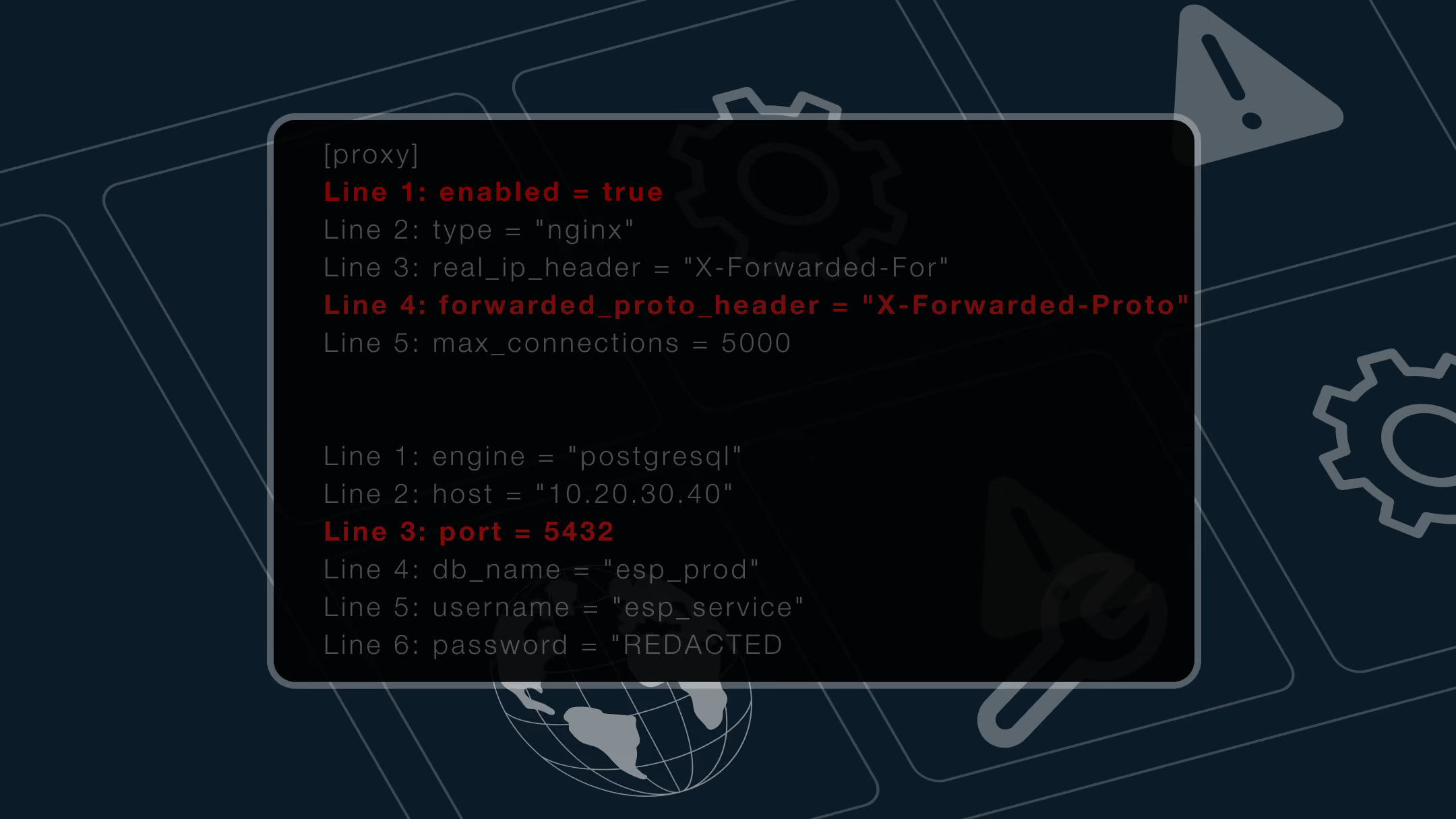
Most enterprise security breaches do not begin with advanced malware or zero-day exploits. They start with configuration errors in cybersecurity, small mistakes in system, identity, or cloud settings that quietly bypass security controls. These security misconfiguration risks often go unnoticed because they appear as legitimate, authorized changes rather than active attacks.
In modern enterprises, the impact of these errors is amplified by scale and complexity. Cloud misconfiguration vulnerabilities, inconsistent access controls, and weak IT configuration management security create exposure across hybrid environments. When misconfigured systems remain accessible, attackers can escalate privileges and move laterally, turning minor mistakes into enterprise security breaches that affect multiple business units.
Understanding how common cybersecurity configuration mistakes lead to misconfigured systems data breaches is critical for preventing small oversights from becoming enterprise-wide incidents. This article explains how attackers exploit configuration errors, why traditional controls fail to detect them, and what organizations must do to reduce misconfiguration risk before it results in a major breach.
What Are Configuration Errors in Cybersecurity?
Configuration errors in cybersecurity refer to insecure system, application, or identity settings that expose resources, expand privileges, or weaken security controls beyond their intended design. Unlike software vulnerabilities, these errors are usually introduced through legitimate administrative actions, making them difficult to detect and easy to overlook.
The most common security misconfiguration risks fall into three categories. Insecure defaults occur when systems are deployed without hardening, leaving unnecessary services or access enabled. Excessive permissions grant users, services, or applications more access than required, increasing the likelihood of privilege escalation. Configuration drift develops over time as changes accumulate without consistent validation, causing environments to deviate from approved security baselines.
These configuration errors occur across cloud infrastructure, identity and access management, networks, and enterprise applications. When left unaddressed, they create persistent exposure that attackers can exploit without triggering traditional security defenses.
Why Attackers Actively Target Configuration Errors
Attackers actively seek out configuration errors because they provide direct access without the effort or risk associated with traditional exploits. A misconfigured cloud service, overly permissive identity role, or exposed management interface can be abused immediately, without triggering vulnerability scanners or endpoint defenses.
Unlike malware-based attacks, exploiting security misconfiguration risks requires no malicious payload. The activity often blends in with normal administrative behavior, making it difficult for security teams to distinguish exploitation from legitimate access. As a result, these attacks frequently remain undetected for long periods.
Most importantly, configuration errors often provide instant leverage. Excessive permissions or insecure defaults can allow attackers to escalate privileges, move laterally, and access sensitive systems early in the intrusion lifecycle. From an attacker’s perspective, configuration errors in cybersecurity represent low-noise, high-reward paths that bypass many traditional security controls.
How Small Configuration Errors Escalate Into Enterprise-Wide Breaches
Step 1: Initial Exposure
Enterprise breaches often begin with a simple configuration oversight. Public cloud storage, open services, or insecure default settings can expose systems directly to the internet. These cloud misconfiguration vulnerabilities and insecure configurations rarely trigger alerts, creating silent entry points that attackers can discover through routine scanning.
Step 2: Privilege Escalation
Once initial access is gained, attackers look for over-permissive IAM roles, weak role separation, or misconfigured service accounts. These security misconfiguration risks allow attackers to elevate privileges without exploiting software vulnerabilities. Identity misuse becomes a primary mechanism for expanding access within the environment.
Step 3: Lateral Movement
With elevated privileges, attackers move laterally across the enterprise. Flat networks, implicit trust relationships, and shared credentials make it easier to access additional systems. At this stage, misconfigured cybersecurity controls enable attackers to pivot quietly between workloads, accounts, and business units.
Step 4: Enterprise Impact
As access expands, the impact becomes organization-wide. Attackers gain broad system access, expose sensitive data, and undermine security controls. Misconfigured logging, access policies, and monitoring often result in control and audit failure, turning a small configuration error into a full enterprise security breach.
Why Security Teams Don’t See Misconfiguration-Driven Breaches Coming
One of the key reasons configuration errors in cybersecurity remain so dangerous is that they often go unnoticed by security teams. Unlike traditional attacks, misconfigurations rarely trigger alerts because the activity appears legitimate. Changes that introduce risk, such as permission adjustments or new service deployments, look “authorized” to monitoring systems, even if they create significant exposure.
As a result, vulnerabilities can persist silently across cloud, identity, and network environments. Security tools are primarily designed to detect malware, exploits, and anomalous behavior, not unsafe configurations or privilege misalignments. This creates a blind spot that attackers can exploit for days or even months without detection.
The outcome is predictable. Small configuration errors escalate quietly, enabling attackers to move laterally and compromise critical systems, often before security teams are even aware a breach has begun. Addressing this visibility gap is essential for preventing enterprise security breaches caused by misconfigured systems.
Common Configuration Mistakes That Lead to Breaches
Many enterprise security breaches can be traced back to a few recurring configuration mistakes. Understanding these common pitfalls helps security teams identify high-risk areas before they are exploited.
- Over-permissive access controls: Granting users, service accounts, or applications more privileges than required creates easy paths for privilege escalation. Attackers can exploit these settings to move laterally across systems.
- Misconfigured cloud storage: Publicly exposed buckets, improper ACLs, or incorrectly applied permissions leave sensitive data accessible to unauthorized parties. Cloud misconfiguration is one of the fastest-growing attack vectors.
- Default credentials: Leaving default usernames and passwords unchanged continues to be a simple but highly effective way for attackers to gain access to systems.
- Temporary access that never expires: Permissions granted for short-term projects often remain indefinitely, silently increasing exposure and enabling attackers to escalate privileges.
- Missing or inconsistent configuration baselines: Without standardized baselines, environments drift over time. These inconsistencies create gaps that attackers can exploit, making it difficult for teams to maintain compliance.
By addressing these common cybersecurity configuration mistakes, organizations can reduce the risk of misconfigured systems data breaches and prevent minor errors from turning into enterprise-wide incidents.
Why Hybrid and Cloud Environments Amplify Configuration Risk
Hybrid and cloud environments introduce unique challenges that make configuration errors more dangerous and harder to detect. The speed of change in modern deployments often outpaces security reviews, allowing misconfigurations to persist unnoticed.
Infrastructure-as-Code drift occurs when automated deployment scripts diverge from established security baselines, creating inconsistencies across environments. This drift can silently introduce vulnerabilities that attackers exploit.
Shared responsibility confusion further increases risk. Organizations often assume the cloud provider is responsible for security, while providers assume the customer manages access and configuration, leaving critical gaps.
Finally, the lack of centralized visibility across hybrid systems and multiple cloud platforms makes it difficult to track misconfigurations, enforce standards, and detect unauthorized changes in time.
Addressing these factors is critical for reducing cloud misconfiguration vulnerabilities and strengthening IT configuration management security across enterprise environments.
Where Configuration Security Ownership Breaks Down in Enterprises
One of the most overlooked causes of enterprise security breaches is a breakdown in configuration security ownership. In many organizations, Dev, Ops, and Security teams assume someone else is responsible for managing configurations. This lack of clarity creates gaps that attackers can exploit.
Without clear accountability for configuration security, temporary exceptions such as elevated permissions for a short-term project often become permanent, silently increasing exposure. Over time, these small lapses accumulate, creating an environment where misconfigurations persist across cloud, identity, network, and application systems.
The key insight is that most configuration breaches are governance failures, not technical failures. Strengthening ownership, enforcing accountability, and embedding configuration management into enterprise security practices are critical steps to prevent small errors from escalating into organization-wide breaches.
Business and Compliance Impact of Configuration-Driven Breaches
Configuration errors in cybersecurity can have severe business and compliance consequences beyond immediate technical exposure. Misconfigured systems often lead to audit control failures, making it difficult for organizations to maintain compliance with frameworks such as SOC 2, ISO 27001, and NIST.
Misconfigurations can also result in loss of evidence and incomplete logging, undermining forensic investigations and incident response. Without proper visibility into system changes and access, organizations struggle to demonstrate security controls during audits.
Finally, improper access controls and misconfigured permissions increase regulatory exposure, potentially resulting in fines, sanctions, or reputational damage. By linking these consequences directly to configuration errors, enterprises can better justify proactive measures to prevent misconfigurations from escalating into full-scale enterprise security breaches.
How to Prevent Small Configuration Errors From Becoming Breaches
Preventing configuration errors from escalating into enterprise-wide breaches requires a combination of technical controls, governance, and continuous monitoring.
- Establish and enforce secure configuration baselines: Use standardized, security-approved settings for all systems, cloud resources, and applications. Regularly validate configurations against these baselines to prevent drift and reduce exposure.
- Enforce least privilege across identity and access: Grant users, services, and applications only the permissions necessary for their roles. Regularly review and adjust access to eliminate unnecessary privileges that could be exploited.
- Continuously monitor for configuration drift: Implement automated tools to detect deviations from approved configurations. Promptly remediate drift to maintain compliance and minimize attack surfaces.
- Assign clear ownership and accountability: Ensure Dev, Ops, and Security teams know who is responsible for configuration management. Embed accountability into processes to prevent temporary exceptions from becoming permanent risks.
- Treat configuration as a first-class security control: Incorporate configuration management into security strategy alongside firewalls, endpoint protection, and identity management. Recognize that misconfigurations are not minor technical issues but critical vectors for enterprise breaches.
By combining these steps, organizations can reduce security misconfiguration risks, strengthen IT configuration management security, and prevent minor errors from evolving into misconfigured systems data breaches.
How CyberQuell Helps Prevent Configuration Errors
Preventing small configuration errors from turning into enterprise-wide breaches requires visibility, governance, and continuous enforcement. CyberQuell helps organizations achieve this with a combination of advanced tools, best-practice frameworks, and expert guidance.
- Continuous Configuration Monitoring: Identify and remediate insecure settings across cloud, network, and identity systems before attackers can exploit them.
- Policy Enforcement and Baseline Management: Establish secure configuration baselines and automatically detect deviations to prevent drift and unauthorized changes.
- Least Privilege Implementation: Audit permissions and enforce strict access controls to reduce the risk of privilege escalation.
- Governance and Accountability: Assign ownership, track changes, and implement robust processes to ensure that temporary exceptions never become permanent vulnerabilities.
- Proactive Threat Intelligence: Leverage insights into how attackers exploit misconfigurations to prioritize remediation and strengthen security posture.
By integrating CyberQuell into your security operations, enterprises can transform configuration management from a potential liability into a first-class security control, significantly reducing the risk of security misconfiguration risks and misconfigured systems data breaches.
Expert Takeaway for Enterprise Security Leaders
Misconfigurations are predictable and preventable, yet they remain one of the leading causes of enterprise security breaches. Attackers actively exploit the small errors that organizations overlook, turning minor oversights into significant business risks.
Preventing these breaches requires a combination of visibility, ownership, and consistency. Security teams must monitor configurations continuously, enforce accountability across Dev, Ops, and Security, and integrate configuration management into core enterprise security practices. By treating configuration as a first-class security control, organizations can reduce security misconfiguration risks, strengthen IT configuration management security, and protect critical systems from compromise.
Small configuration errors may seem insignificant, but as we’ve seen, they can escalate quickly into enterprise-wide breaches. Every misconfigured cloud resource, excessive permissions, or drifted settings amplify risk across systems, identities, and applications. The key to prevention is proactive control: continuously monitoring configurations, enforcing least privilege, and assigning clear ownership.
Enterprises cannot afford to wait for incidents to expose vulnerabilities. By treating configuration as a first-class security control, organizations can prevent minor errors from turning into major breaches.
CyberQuell helps you take control of configuration security across your enterprise. With advanced monitoring, policy enforcement, and expert guidance, CyberQuell ensures that misconfigurations are detected and remediated before attackers can exploit them. Protect your systems, enforce accountability, and reduce security misconfiguration risks today. Act now with CyberQuell and stop breaches before they start.