Key Takeaways
- Ethical hacking simulates real attacks to uncover deep, exploitable vulnerabilities.
- Vulnerability scanning automates detection of known security flaws.
- Combining both methods ensures comprehensive cybersecurity protection.
- SMBs benefit from regular scans plus periodic penetration testing.
- Continuous monitoring and timely remediation are critical for risk reduction.
Imagine a company that believed its network was secure, until a cybercriminal exploited an unnoticed vulnerability, causing a data breach that disrupted operations and damaged customer trust. Situations like this highlight a harsh reality. Simply having a firewall or antivirus is not enough.
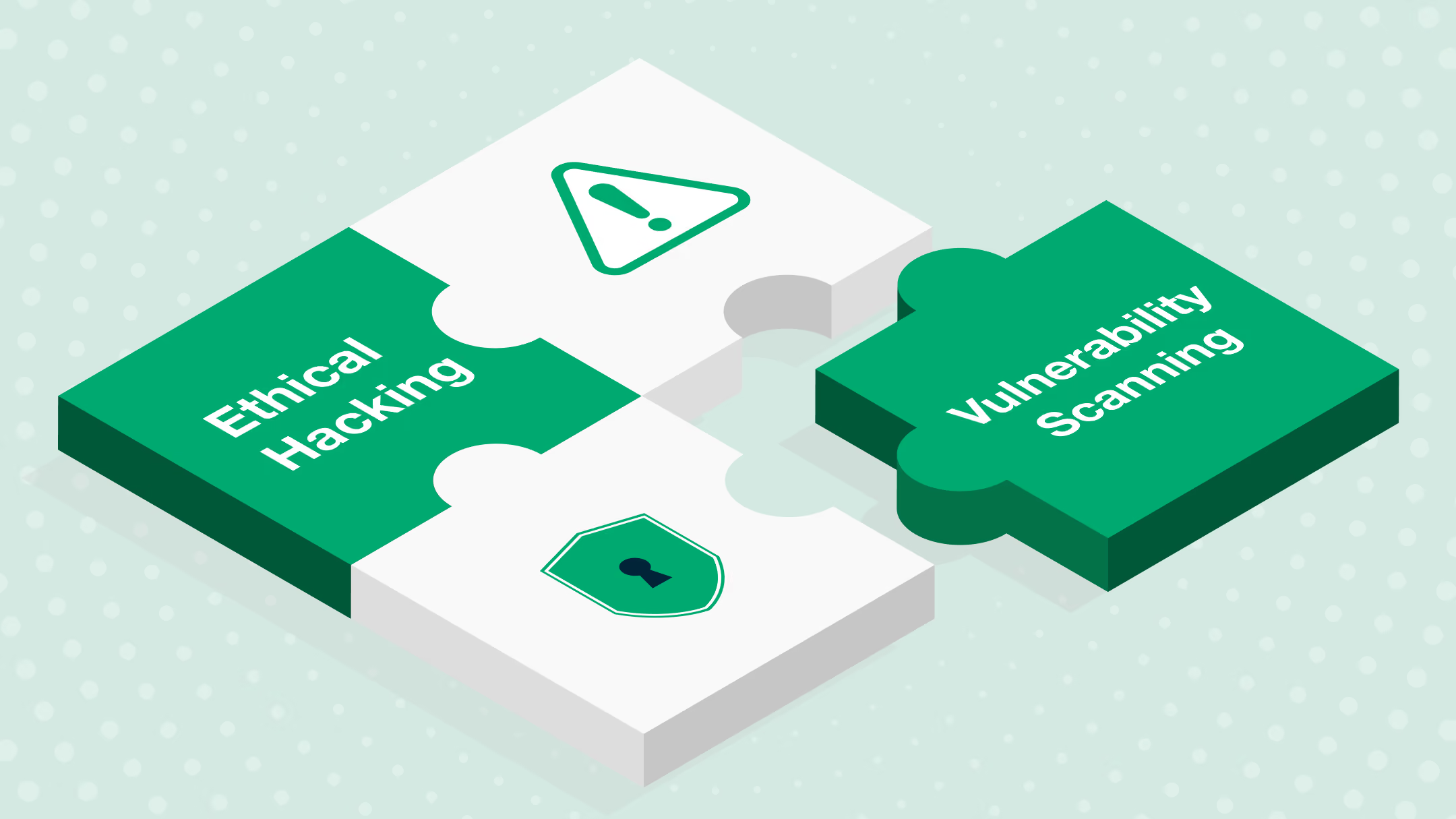
This is where ethical hacking vs vulnerability scanning comes into play. While vulnerability scanning automatically identifies known weaknesses across networks and systems, ethical hacking, or penetration testing, goes deeper, simulating real-world attacks to uncover hidden risks. Together, they provide a comprehensive cybersecurity defense.
This guide is designed for IT professionals, security analysts, executives, cybersecurity learners, and consultants who want to understand the differences, benefits, and best practices of both approaches. You will learn how to make informed decisions, strengthen your security posture, and reduce organizational risk.
Ethical Hacking Explained
What is Ethical Hacking?
Ethical hacking means deliberately testing a system, network, or application for security weaknesses with the owner’s permission. Ethical hackers use the same methods and tools as malicious hackers, but their goal is to find vulnerabilities before attackers do and help fix them. This proactive testing improves overall security and reduces the risk of breaches.
Ethical hacking goes beyond just running scans. It may involve exploring systems, exploiting weaknesses, and understanding how an attacker could move through an environment all under strict legal and ethical guidelines.
Tools and Techniques Used by Ethical Hackers
Ethical hackers rely on a combination of open‑source and commercial tools to simulate real‑world attacks and assess security exposure. Popular examples include:
- Kali Linux – A Linux distribution packed with hundreds of security tools designed for ethical hacking and penetration testing.
- Nmap – A network scanner used to find hosts, open ports, and services.
- Metasploit – A framework for developing, testing, and executing exploits against systems.
- Wireshark – Network traffic analyzer for diagnostic and security testing.
- Burp Suite – Web application security testing platform.
Besides tools, ethical hackers use a variety of techniques such as reconnaissance, vulnerability analysis, social engineering, and exploitation to mimic attacker behavior in a controlled way.
Real‑World Example
A retail company might hire an ethical hacker to test its e‑commerce platform. During testing, the hacker discovers a severe SQL injection vulnerability that could expose customer data. After reporting this to the security team, the company patches the flaw and strengthens its defenses before any malicious attack occurs. REF
When and Why to Use Ethical Hacking
Ethical hacking is most useful when you need more than automated scanning can provide:
- To simulate real cyberattacks and understand how an attacker might breach defenses.
- To test complex systems or applications where manual analysis uncovers deeper weaknesses.
- Prior to major software releases, infrastructure changes, or compliance audits.
- When you want a comprehensive assessment of security posture rather than just a list of potential issues.
Because ethical hacking involves active intrusion and exploitation of systems, it should only be done with explicit authorization and clear rules of engagement to prevent legal or operational issues.
Vulnerability Scanning Explained
What is Vulnerability Scanning?
Vulnerability scanning is the automated process of identifying known weaknesses in networks, systems, and applications. Unlike ethical hacking, which involves manual testing and exploitation, vulnerability scanning relies on pre-configured tools to detect outdated software, misconfigurations, missing patches, and other common security gaps. This helps organizations proactively identify risks before attackers can exploit them.
Vulnerability scanning is an essential part of network security testing and overall cybersecurity defense strategy because it provides continuous insight into the security posture of an organization.
Tools and Techniques
Organizations use a range of automated tools to perform vulnerability scanning. Some of the most widely used include:
- Nessus – One of the most popular vulnerability scanners, capable of scanning for misconfigurations, missing patches, and vulnerabilities across operating systems, network devices, and applications.
- OpenVAS – An open-source scanner that identifies known vulnerabilities and produces comprehensive reports for remediation.
- Qualys – Cloud-based platform that provides continuous scanning and asset discovery, with detailed reports for compliance and risk management.
Vulnerability scanning typically uses techniques such as network discovery, configuration assessment, and automated testing against known vulnerability databases to provide a full view of an organization’s risk landscape.
Real-World Example
A financial services firm uses automated vulnerability scanning to continuously monitor its servers and workstations. During routine scans, the system flags outdated software versions and misconfigured firewall rules. The IT team addresses these issues immediately, preventing potential breaches and ensuring regulatory compliance. REF
Integration into Enterprise Security and Compliance Workflows
Vulnerability scanning is most effective when integrated into broader security and compliance workflows:
- Continuous Monitoring: Regular scans provide ongoing awareness of security gaps.
- Patch Management: Integration with IT operations ensures discovered vulnerabilities are remediated promptly.
- Compliance Reporting: Scans generate reports that help meet regulatory standards such as PCI-DSS, ISO 27001, and HIPAA.
- Risk Prioritization: Security teams can prioritize remediation based on the severity and exploitability of vulnerabilities.
By combining automated scanning with manual verification and ethical hacking, organizations can achieve a comprehensive and proactive security posture.
Key Differences: Ethical Hacking vs Vulnerability Scanning
Understanding the differences between ethical hacking and vulnerability scanning helps organizations choose the right approach for their environment. While both aim to reduce risk, they serve distinct purposes and operate differently.
Comparison Table: Ethical Hacking vs Vulnerability Scanning
Guidance for SMBs vs Enterprises
- Small and Medium Businesses (SMBs):
- Often have limited IT resources, making automated vulnerability scanning a practical first step.
- Periodic ethical hacking can complement scans to identify deeper vulnerabilities without excessive cost.
- Large Enterprises:
- Complex networks and sensitive data require both approaches.
- Vulnerability scanning provides continuous oversight, while ethical hacking simulates sophisticated attacks to expose critical weaknesses.
- Cloud vs On-Premise Environments:
- Cloud infrastructures benefit from automated scanning due to scale, but ethical hacking ensures cloud-specific configurations are secure.
- On-premises systems may need deeper manual testing to identify vulnerabilities across legacy systems and internal networks.
Benefits & Use Cases
Understanding the benefits of ethical hacking and vulnerability scanning helps organizations decide how to apply these methods effectively. Both approaches strengthen security, but they serve different purposes and provide complementary insights.
Ethical Hacking Benefits
- Detecting Complex Vulnerabilities: Ethical hacking goes beyond automated scans to uncover hidden, high-risk vulnerabilities that attackers could exploit.
- Simulate Real-World Attacks: By mimicking attacker behavior, ethical hackers test systems under realistic conditions, preparing teams to respond to threats effectively.
- Supports Compliance and Audit Readiness: Penetration tests help organizations meet regulatory requirements such as PCI-DSS, ISO 27001, and HIPAA by demonstrating proactive security measures.
A financial firm hires ethical hackers to simulate attacks on its online banking platform. The team discovers critical gaps in authentication workflows that were not visible during automated scans. By addressing these issues before going live, the organization prevents potential breaches and ensures regulatory compliance.
Vulnerability Scanning Benefits
- Continuous Monitoring: Automated scans provide regular updates on vulnerabilities across systems, applications, and networks, maintaining ongoing security visibility.
- Faster Remediation: Scans generate detailed reports that help IT teams prioritize and fix common vulnerabilities quickly.
- Cost-Effective for Large-Scale Networks: Vulnerability scanning is scalable and efficient, making it suitable for organizations with extensive IT infrastructure.
A large retail company runs weekly vulnerability scans across all servers and workstations. The scans detect unpatched software and misconfigured network devices. The IT team addresses these issues immediately, reducing exposure to potential exploits and saving costs by preventing downtime or breaches.
Risks & Limitations
While ethical hacking and vulnerability scanning are both essential for a robust cybersecurity strategy, each has limitations that organizations must understand. Knowing these risks helps IT teams apply the right approach at the right time.
Ethical Hacking Risks
- Time and Resource Intensive: Ethical hacking requires skilled personnel and can take days or weeks to complete, depending on the system’s complexity.
- Potential System Disruption: If tests are poorly executed or rules of engagement are unclear, penetration testing can accidentally disrupt services or cause downtime.
- Expertise Requirement: Only trained ethical hackers should conduct these tests to avoid operational or legal issues.
Vulnerability Scanning Risks
- May Miss Advanced Threats: Automated scanners typically detect known vulnerabilities but cannot uncover sophisticated or zero-day exploits.
- False Positives: Scans can sometimes flag non-critical issues, requiring manual verification to avoid unnecessary remediation.
- Not Comprehensive: Scanning provides a snapshot of security posture but lacks the depth and context that manual ethical hacking provides. (qualys.com)
Example Scenario
Consider an organization performing quarterly vulnerability scans and annual penetration tests.
- The automated scans detect outdated software and missing patches, which can be fixed quickly.
- During the annual penetration test, the ethical hackers uncover a previously undetected SQL injection vulnerability that could have allowed attackers to access sensitive customer data.
Key Insight: Relying solely on one method could leave critical gaps exposed.
Why Combining Both Approaches Maximizes Security
- Vulnerability scanning ensures continuous monitoring and rapid detection of known issues.
- Ethical hacking uncovers deeper, complex vulnerabilities and simulates real-world attack scenarios.
- Together, they provide a comprehensive security strategy, balancing efficiency, coverage, and risk reduction.
Best Practices & Expert Tips
Implementing ethical hacking and vulnerability scanning effectively requires planning, consistent execution, and the right tools. Following these best practices helps organizations maximize security while minimizing risks.
Recommended Frequency
- Vulnerability Scanning: Conduct scans regularly, ideally weekly or monthly, depending on the size and complexity of your IT environment. Continuous or scheduled scans help identify known vulnerabilities before attackers exploit them.
- Ethical Hacking: Perform penetration tests periodically, such as quarterly, biannually, or before major software releases or infrastructure changes. This ensures deeper vulnerabilities are identified proactively. REF
Integration into SOC or IT Workflows
- Incorporate scanning and pentesting results into your Security Operations Center (SOC) workflows.
- Use automated alerts from scans to trigger incident response processes.
- Ethical hacking reports should feed into risk management and patch management workflows, enabling actionable remediation.
- Document findings and remediation steps to improve continuous monitoring and compliance reporting.
Tool Selection Guidance
Choosing the right tools depends on network size, system type, and organizational risk profile:
- Small Networks: Lightweight vulnerability scanners like OpenVAS or Nessus Essentials are cost-effective and sufficient for SMBs.
- Large or Complex Networks: Enterprise-grade solutions like Qualys, Nessus Professional, or commercial penetration testing frameworks like Metasploit provide in-depth analysis.
- Cloud Environments: Ensure tools support cloud-native scanning and compliance checks, such as cloud security posture management (CSPM) features. (qualys.com)
Reporting and Remediation Best Practices
- Prioritize vulnerabilities based on severity, exploitability, and business impact.
- Provide clear, actionable reports for IT and security teams, with recommended steps for mitigation.
- Track remediation progress and validate fixes with follow-up scans or targeted penetration tests.
- Maintain audit-ready documentation to support compliance requirements.
Workflow Example: Combining Scanning + Pentesting
Step 1: Continuous vulnerability scans detect known issues across systems.
Step 2: Scheduled ethical hacking tests simulate real-world attacks to find deeper vulnerabilities.
Step 3: Security team analyzes reports, prioritizes risks, and applies remediation.
Step 4: Follow-up scans and tests validate that vulnerabilities are resolved.
This workflow ensures comprehensive coverage, balancing speed, efficiency, and depth of security testing.
Common Mistakes to Avoid
Even with ethical hacking and vulnerability scanning in place, organizations often make mistakes that reduce the effectiveness of their cybersecurity strategy. Awareness of these pitfalls ensures better risk management and stronger defenses.
Over-Reliance on One Method
- Using only vulnerability scanning or only ethical hacking leaves gaps in security coverage.
- Vulnerability scanning alone may miss complex threats, while ethical hacking alone cannot continuously monitor systems.
- Best Practice: Combine both approaches for comprehensive protection.
Ignoring Remediation
- Detecting vulnerabilities is only half the battle. Failing to remediate discovered issues leaves systems exposed.
- Security teams must prioritize and act on scan and test findings promptly.
- Best Practice: Implement workflows that ensure remediation actions are tracked, verified, and documented.
Using Outdated Tools or Incomplete Coverage
- Old or unsupported scanning and pentesting tools may fail to detect modern vulnerabilities or emerging attack techniques.
- Partial coverage of networks, endpoints, or applications can give a false sense of security.
- Best Practice: Regularly update tools and ensure scans cover all critical assets.
Neglecting SMB-Specific or Cloud-Specific Considerations
- Small businesses often underestimate the importance of periodic ethical hacking, while cloud environments may have unique configurations that standard scans miss.
- Ignoring these factors can leave critical vulnerabilities undetected.
- Best Practice: Tailor security strategies based on organization size, network complexity, and deployment environment.
Decision Guidance: SMB vs Enterprise, Cloud vs On-Premise
Choosing between ethical hacking and vulnerability scanning or deciding how to combine them depends on organization size, IT complexity, and deployment environment. Understanding these factors helps organizations prioritize resources and maximize security impact.
Prioritizing Methods by Organization Size and IT Complexity
- Small and Medium Businesses (SMBs):
- Often have limited IT staff and budgets.
- Vulnerability scanning provides cost-effective, continuous monitoring for known risks.
- Periodic ethical hacking is recommended to uncover deeper vulnerabilities that automated scans might miss.
- Large Enterprises:
- Complex IT infrastructures, multiple business units, and sensitive data require a layered approach.
- Continuous vulnerability scanning ensures routine oversight, while regular ethical hacking simulates sophisticated attacks across systems, applications, and networks.
- Enterprise-grade tools and dedicated security teams make implementation more feasible and effective.
Cloud, Hybrid, and Remote Workforce Considerations
- Cloud Environments: Automated vulnerability scanning is essential for continuous monitoring, but ethical hacking is still needed to test cloud-specific configurations and potential misconfigurations.
- Hybrid Networks: A combination of on-prem and cloud assets increases complexity. Ethical hacking should target critical connections and integration points, while scans cover routine endpoints.
- Remote Workforce: Laptops, VPNs, and home networks introduce new attack surfaces. Vulnerability scanning ensures devices are patched, while ethical hacking can simulate attacks from remote locations to identify gaps. (qualys.com)
Cost vs Impact Analysis
- Vulnerability Scanning: Low cost, scalable, provides broad coverage, fast results. Ideal for maintaining baseline security and compliance.
- Ethical Hacking: Higher cost due to skilled labor and depth of testing, but uncovers critical vulnerabilities that could lead to major breaches.
- Combined Approach: Balances cost and impact. Continuous scanning handles routine risk, while periodic ethical hacking addresses high-risk areas and complex threats, providing maximum ROI on cybersecurity investment.
Ethical hacking and vulnerability scanning are both essential for a robust cybersecurity strategy. Vulnerability scanning continuously detects known weaknesses, while ethical hacking simulates real-world attacks to uncover complex vulnerabilities. Together, they provide a complete security defense that protects your organization from evolving threats.
At Cyberquell, we help organizations combine automated scanning with expert penetration testing to close security gaps and strengthen defenses. Assess your current practices, implement both approaches where needed, and choose the right tools for your business size and risk profile.
Take control of your cybersecurity today. Partner with Cyberquell to secure your networks, protect critical data, and stay ahead of cyber threats.